


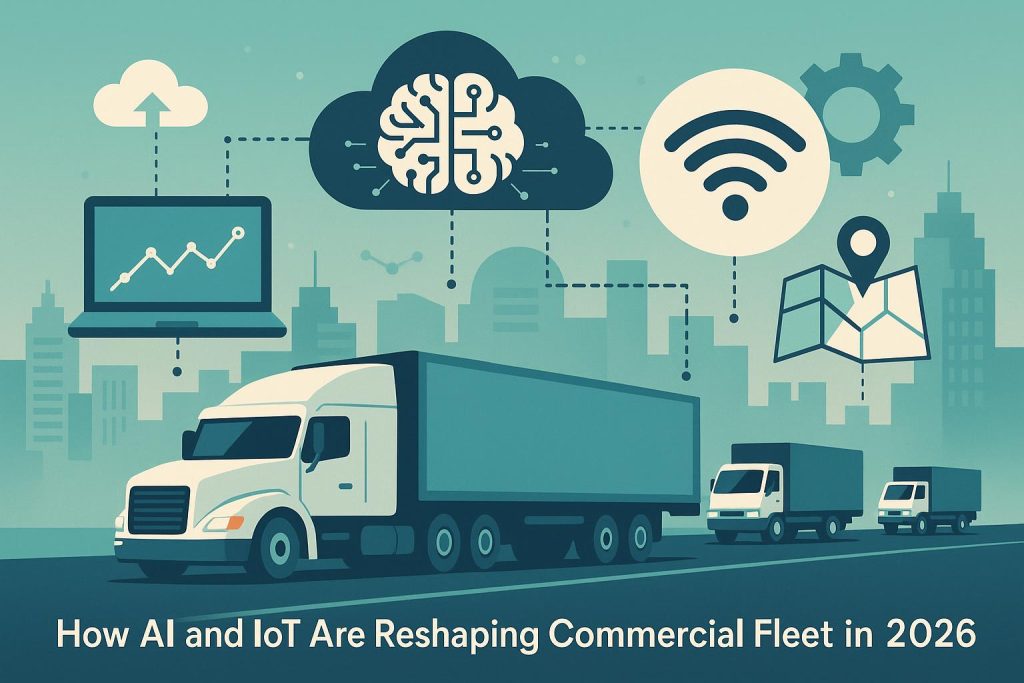
The commercial trucking industry moves billions of dollars in freight across North America every year, yet many fleet operators still rely on outdated processes to manage their vehicles. That is changing fast. Artificial intelligence and the Internet of Things are converging to give fleet managers real-time visibility into everything from engine health to driver behavior, creating a technology shift that rivals the introduction of electronic logging devices a decade ago.
For technology leaders and business decision-makers outside the trucking world, the transformation underway in commercial transportation offers a compelling case study in how AI and connected hardware deliver measurable ROI in asset-heavy industries.
Predictive Maintenance Is Replacing Guesswork
Traditional fleet maintenance followed a calendar-based approach: change the oil every 25,000 miles, inspect brakes every 90 days, and replace filters on a fixed schedule. The problem is that identical trucks operating in different conditions wear at vastly different rates. A truck running mountain routes in Colorado degrades brake components far faster than one covering flat highway miles in Kansas.
IoT sensors now stream continuous data from engine control modules, transmission systems, and brake assemblies to cloud-based analytics platforms. Machine learning algorithms process these data points to identify patterns that precede failures—often weeks before a breakdown would occur. The result is maintenance triggered by actual component condition rather than arbitrary timelines.
Industry data suggests that well-implemented predictive systems reduce unplanned downtime by up to 40% and cut maintenance expenses by 15–20%. For a fleet of 100 Class 8 trucks, where a single day of unplanned downtime costs an estimated $1,000–$1,500 per vehicle, those savings add up quickly.
Telematics Platforms Have Evolved Beyond GPS Tracking
Early telematics systems offered little more than dot-on-a-map location tracking. Modern platforms are fully integrated operations hubs that combine GPS data with engine diagnostics, fuel consumption analytics, driver scorecards, and compliance monitoring in a single dashboard. Many now incorporate computer vision through AI-powered dash cameras that detect distracted driving, tailgating, and lane departure in real time.
Choosing the right platform has become a strategic decision with significant financial implications. A detailed fleet telematics software comparison shows that leading solutions like Samsara, Verizon Connect, and Geotab now compete across more than 50 evaluation criteria—from refresh rates and AI integration to ELD compliance and predictive maintenance capabilities. The days of selecting a telematics provider based solely on price are over.
AI-Powered Decision Making at Scale
What makes the current wave of fleet technology different from previous iterations is the ability to synthesize data across an entire operation and surface actionable recommendations. Earlier systems generated data; modern AI systems generate decisions.
Route optimization algorithms now factor in real-time traffic, weather forecasts, fuel prices, hours-of-service constraints, and delivery windows simultaneously. Driver coaching systems automatically identify high-risk behaviors and deliver targeted training without requiring a safety manager to review hours of camera footage. Fuel management modules correlate driving patterns with consumption data to identify specific habits that waste diesel.
The fleet management technology market reflects this momentum, with analysts projecting it will exceed $52 billion by 2030. Organizations evaluating AI technology for fleets are finding that well-implemented systems deliver 12–18 month payback periods through a combination of reduced accidents, lower fuel costs, and fewer emergency repairs. Three-quarters of operations leaders now consider artificial intelligence essential for maintaining competitive efficiency.
What Other Industries Can Learn from Trucking’s AI Adoption
The commercial trucking industry is not typically viewed as a technology pioneer, but its adoption curve for AI and IoT offers practical lessons for any sector managing distributed physical assets. Construction companies with heavy equipment fleets, delivery services scaling last-mile operations, and agricultural businesses monitoring field machinery all face similar challenges around maintenance scheduling, operator safety, and asset utilization.
The key takeaway is that AI delivers the strongest returns when it connects directly to operational workflows rather than existing as a standalone analytics layer. In trucking, the most successful implementations are those where predictive alerts feed directly into maintenance work order systems, where safety scores influence dispatch decisions, and where fuel data automatically adjusts route planning. The technology works because it removes friction from existing processes rather than creating new ones.
Looking Ahead
Autonomous vehicle technology continues to capture headlines, but the more immediate and impactful revolution in commercial transportation is the intelligent automation of fleet operations through AI and IoT. These tools are available today, delivering proven returns, and transforming an industry that underpins the entire supply chain. For technology professionals and business leaders tracking where AI creates real value, fleet operations deserve a closer look.