


Jordan Harris is a laboratory operations professional based in Portland, Oregon, with more than 15 years of experience working with analytical systems and environmental standards. Over the course of his career, Jordan Harris has served as a field services engineer with Astoria Pacific and as a laboratory manager at Pace Analytical Services in Dayton, Ohio. His work has included maintaining laboratory instrumentation, overseeing workflow management, and ensuring compliance with Environmental Protection Agency and other regulatory standards. With a degree in biological sciences from Wright State University, he brings a strong scientific background to topics involving environmental awareness and safety. His experience with research, analysis, and field-based systems provides useful context when considering topics such as safe foraging practices and the risks associated with identifying wild mushrooms.
Practical Tips for Avoiding Poisonous Mushrooms While Foraging
Foraging is the act of locating, identifying, and gathering food resources such as nuts, berries, herbs, and mushrooms, from natural environments. Gathering wild mushrooms is especially common; some Americans hunt for mushrooms for culinary purposes, while others gather them for medical or research reasons, or collect them as a hobby. Mushroom hunting can be an enjoyable, educational experience for foragers of all ages. However, individuals must perform proper research to avoid common foraging dangers, including the consumption of poisonous mushrooms.
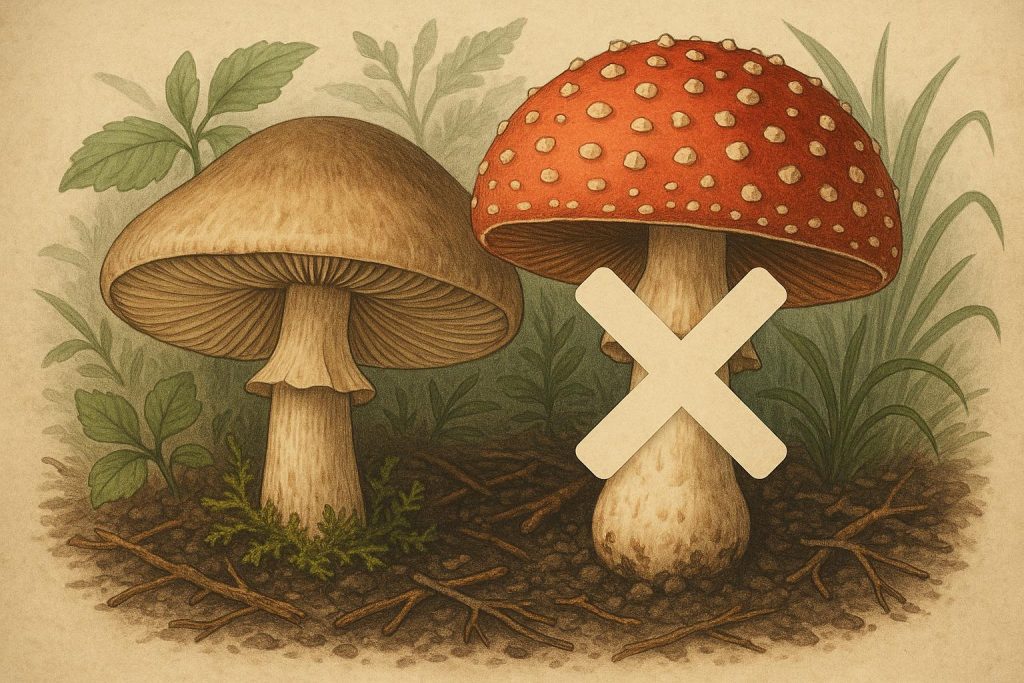
Arguably the most important tip for all foragers is to avoid touching or ingesting a mushroom if there is any doubt as to whether the species is poisonous. Even if a person feels 99 percent sure that they have collected an edible variety, they should err on the side of caution and dispose of it unless they are certain. Some edible species look very similar to their poisonous counterparts.
While the proportion of cases is said to be small, the American Association of Poison Control Centers still records thousands of mushroom poisonings each year, occasionally resulting in fatalities. Experts believe that the majority of poisonings happen from eating mushrooms that collectors believed were safe, underscoring the importance of proper foraging education and mushroom identification skills.
Amateurs need to appreciate the importance of thorough research, ideally with the help of a practiced forager. Poison isn’t the only issue. For instance, foragers should always look for fresh specimens. Even if a person collects a perfectly edible mushroom, they need to thoroughly cook it to improve digestibility. Even then, some foragers experience allergic reactions to otherwise safe, well-cooked mushrooms.
Morels are the perfect example of the complexities foragers must navigate. Morels are a popular target for foragers during the spring. They grow under specific trees, including hickory and elm, making them relatively easy to find. However, although morels are technically edible, they are toxic when consumed raw. Meanwhile, the brain mushroom closely resembles several species of morel but has a much higher concentration of toxicity. Brain mushrooms produce a poisonous chemical called gyromitrin, a component in rocket fuel. Foragers who make the mistake of eating a brain mushroom, also known as a false morel, typically fall very ill, and in some cases, die.
Meadow mushrooms are another popular, relatively easy-to-find species associated with pastures and garden lawns. They closely resemble the button mushrooms purchased in grocery stores. Unfortunately, they also look like and share habitats with the destroying angel, a potentially fatal variety that causes severe liver damage. The false parasol is another poisonous mushroom with a similar visual profile to the meadow mushroom. Although not quite as deadly as the destroying angel, it causes gastrointestinal distress and ranks as the most frequently consumed poisonous mushroom in all of North America.
Finally, chanterelle mushrooms are both beautiful and edible, known for their trademark ridges that grow on the underside of their caps. But they too have a poisonous lookalike, the jack-o-lantern, also known as the false chanterelle. Practiced foragers can tell real chanterelles from false ones by the jack-o-lantern’s gills, rather than ridges. Foragers who cannot make this slight distinction and consume a false chanterelle can experience days of vomiting and diarrhea.
About Jordan Harris
Jordan Harris is a laboratory operations professional with experience in analytical instrumentation and environmental compliance. He has worked as a field services engineer with Astoria Pacific and as a laboratory manager at Pace Analytical Services, where he supervised staff and managed laboratory workflows. Harris holds a biological sciences degree from Wright State University and maintains professional affiliations with environmental organizations. Based in Portland, Oregon, he also volunteers locally to support community food access initiatives.