Adrien Finzi, owner of Ataraxia Construction in Boston, brings a scientist’s curiosity and analytical depth to everything he pursues, including his longstanding appreciation for music. Before entering the construction and home restoration field, Adrien Finzi spent more than two decades as a professor at Boston University, publishing over 100 peer-reviewed scientific papers and securing major federal research grants. His academic work included launching a new interdisciplinary PhD program and presenting research at international conferences. This rigorous scientific background shapes the way he understands complex systems, including the human brain. A licensed construction supervisor who now renovates architecturally significant homes, he remains passionate about music, playing guitar in his free time and exploring how sound influences cognition, emotion, and memory. With this blend of scientific expertise and personal interest, Adrien Finzi introduces a clear and accessible overview of how music affects the brain.
How Does Music Affect the Brain?
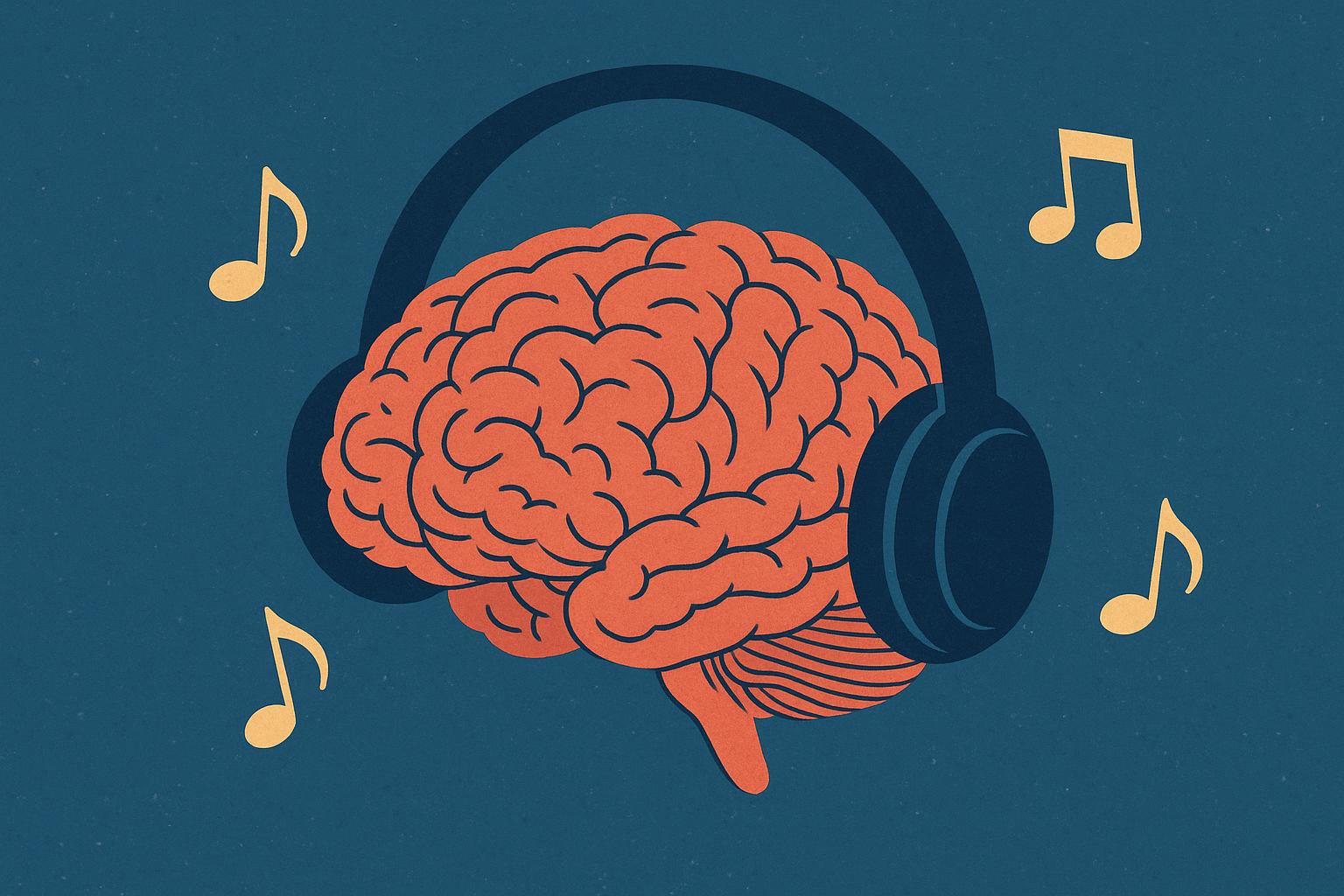
Music, a powerful, universal phenomenon that impacts nearly everyone, is a “very primal thing,” according to experts. By activating various parts of the brain, music influences physical and mental health, emotions, memory, thoughts, and beliefs. Scientists also suggest that music stimulates more parts of the brain than any other human function.
When you hear a song you love, the auditory cortex becomes active. Music also engages the brain’s timing and prediction networks—including the basal ganglia and cerebellum—which in turn activate motor regions such as the premotor and motor cortices. This widespread network activity creates an unconscious urge to move, which is why people often tap their foot or nod to the beat.
Music has a powerful influence on the brain, particularly on the limbic system, which includes structures such as the amygdala and hippocampus. These regions help regulate emotional responses, pleasure, motivation, and memory. When a familiar song engages this system, it can evoke a strong sense of nostalgia and bring back vivid emotions tied to meaningful moments. Because musical memory pathways often remain intact even when other cognitive functions decline, therapists frequently use music with Alzheimer’s patients to help stimulate preserved memories—sometimes enabling individuals to sing lyrics or hum melodies they cannot otherwise recall.
The amygdala plays a central role in shaping emotional reactions to music by helping form emotional memories and interpret arousal patterns in sound. These responses are driven less by a song’s lyrical content and more by its acoustic and emotional qualities—tempo, rhythm, pitch, and intensity. Because musical preferences reflect personal history and emotional associations, what feels pleasant or comforting varies widely from one listener to another. Music can also trigger the release of dopamine within the brain’s reward system, especially in the nucleus accumbens, contributing to feelings of pleasure, anticipation, and enjoyment.
Music also influences cognitive performance. Research suggests that certain rhythmic structures can support memory recall, including the recall of verbal material. Some studies link music exposure—particularly musical training—to improvements in spatial reasoning, linguistic processing, creativity, and sustained attention, although results vary among individuals and tasks. The “arousal-and-mood hypothesis” helps explain these effects: music can elevate arousal and improve mood, creating optimal conditions for learning, focus, and engagement.
Music additionally interacts with the brain’s frontal and prefrontal regions, which govern attention and executive function. For some individuals, especially those with ADHD, background music can provide enough external stimulation to support focus and task completion. While responses differ from person to person, music often helps listeners achieve an optimal balance of arousal that enhances concentration.
Physiologically, music has well-documented effects on stress and the autonomic nervous system. Listening to calming music can lower cortisol levels, reduce heart rate and blood pressure, and trigger the release of endorphins, which promote well-being. Tempo also matters: faster music tends to increase physiological arousal, while slower music tends to reduce it. Music can even lessen the perception of pain by providing distraction, increasing pain tolerance, and activating the body’s natural opioid system.
Music also supports brain recovery through neuroplasticity—the brain’s ability to reorganize and form new connections. After injuries such as stroke or traumatic brain injury, music therapy can stimulate neural circuits that aid in cognitive, language, and motor recovery. A notable 2008 study reported that stroke patients who listened to music daily during early recovery showed significantly greater improvements in verbal memory and attention than those who listened to audiobooks or received standard care.
Learning and performing music further strengthen brain connectivity by activating multiple regions simultaneously. Musical training enhances motor coordination, auditory processing, and hand-eye integration. Studies consistently show that professional musicians often have a more developed corpus callosum—the major fiber tract linking the brain’s hemispheres—resulting in faster reaction times and more efficient communication between brain regions.
About Adrien Finzi
Adrien Finzi is the owner of Ataraxia Construction in Boston, specializing in the renovation and restoration of architecturally significant homes. A former Boston University professor with more than 100 peer-reviewed publications, he holds degrees in environmental conservation, statistics, and ecology. An avid musician and guitarist, he maintains a deep interest in how music shapes cognition and emotion.