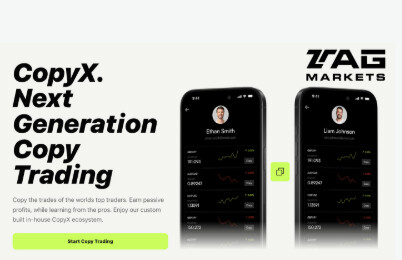
Sonic AI has attracted attention through its combination of gold trading, automated trade-copying, leveraged or amplified trading accounts, and an affiliate-based compensation model. Promotional material presents the opportunity as a technology-driven trading ecosystem capable of generating returns through strategies focused heavily on gold, particularly XAU/USD.
At the same time, prospective participants may encounter questions surrounding the companies connected to the model, the broker used for trading, regulatory warnings involving TAG Markets, the mechanics of account amplification, and the backgrounds of individuals involved in promoting the opportunity.
Those issues deserve careful examination.
This review does not attempt to label Sonic AI as fraudulent or legitimate based on promotional claims or isolated regulatory references. Instead, it separates the claims made by the ecosystem from matters that can be independently established and identifies the questions a prospective customer or affiliate should investigate before committing funds.
What Is Sonic AI?
Sonic AI is promoted as an online trading proposition built around automated or semi-automated trading, with gold markets playing a particularly important role.
The model has been presented through several interconnected names, including Sonic AI, AITech, COPYX, and TAG Markets. An affiliate programme is also part of the broader commercial structure.
The attraction is relatively straightforward: rather than requiring customers to make individual trading decisions, the proposition is marketed around a strategy that can execute or copy trades on behalf of participants.
Promotional material has highlighted historical trading performance, automated execution, account amplification, and the possibility of earning commissions by introducing other participants.
That combination makes the opportunity potentially attractive to both traders and network marketers.
However, understanding the underlying structure is more important than simply reviewing headline returns.
A prospective participant should establish:
- Which legal company actually provides each service
- Who holds customer deposits
- Who executes the trades
- Which entity provides the technology
- Which company operates the affiliate programme
- What contractual relationship exists between these entities
- Which regulator, if any, supervises each activity
- Whether the service is available legally in the customer’s country
These questions can materially change the risk profile.
The Role of AITech and COPYX
AITech appears within the broader Sonic AI ecosystem as a technology and infrastructure-related component. Promotional material has also associated the ecosystem with tools and systems used for affiliate management and trading-related activity.
COPYX has been presented as technology supporting trade copying.
Trade-copying itself is not unusual. In principle, a customer can connect an account to a strategy provider and have trades replicated automatically rather than placing every order manually.
The important issue is therefore not simply whether trade copying exists, but how it operates in this particular structure.
Questions worth asking include:
- Where is the trading strategy actually hosted?
- Who controls the strategy?
- Is execution automated?
- Can human traders intervene?
- Does COPYX transmit signals or directly control trading accounts?
- What happens if the technology becomes unavailable?
- Is there a single point of failure?
- How are copied trades adjusted for different account sizes?
- Are customers guaranteed identical execution to the strategy account?
Technical infrastructure should also be distinguished from legal ownership.
A website, software system, hosting relationship, domain registration, or technology connection may demonstrate that entities are connected operationally. It does not, by itself, establish who legally owns or controls a business.
For that, corporate filings, contracts, official disclosures, and regulatory records are more relevant.
Examining the Trading Performance Claims
One of the strongest promotional features associated with Sonic AI is historical trading performance.
Public trading records and performance-tracking platforms such as Myfxbook can provide useful information. They may show trading activity, historical returns, drawdowns, account balances, and other statistics.
That information can be valuable, but it needs to be interpreted correctly.
A historical trading account demonstrates what happened in that particular account under those particular conditions. It does not automatically establish that every customer will receive the same result.
Execution can vary because of:
- Broker spreads
- Slippage
- Liquidity
- Account type
- Trading conditions
- Position sizing
- Timing
- Market volatility
- Platform availability
- Differences between strategy and customer accounts
Consequently, an impressive historical result should be treated as evidence of historical performance rather than a guarantee of future profitability.
It also does not independently prove claims about the total number of customers, the percentage of customers who are profitable, withdrawal experiences, or the overall commercial success of the business.
Those are separate claims requiring separate evidence.
What Does “AI” Actually Mean?
The Sonic AI name naturally creates an expectation that artificial intelligence plays a significant role in the trading process.
That raises an important due-diligence question: what exactly is the AI doing?
AI could theoretically be involved in areas such as:
- Market analysis
- Signal generation
- Pattern recognition
- Trade selection
- Risk assessment
- Position sizing
- Portfolio management
- Execution
- Monitoring
- Supporting human traders
However, promotional references to AI do not by themselves explain the precise technology being used.
There is also material referring to professional or human traders, which creates another important distinction.
A prospective customer should determine whether the system is:
- Fully automated,
- AI-assisted but human-controlled,
- Primarily operated by human traders with software support, or
- A combination of these approaches.
The difference matters because the risk, scalability, transparency, and dependence on particular individuals can vary significantly between these models.
The 12X and 24X Account Amplification Claims
Another major feature promoted within the Sonic AI model is account amplification.
Examples such as 12X or 24X can sound like an increase in capital, but the distinction between account balance and trading exposure is critical.
For example, if a customer deposits $10,000 and an arrangement describes the account as having 24X amplification, that could mean the trading strategy has access to exposure equivalent to $240,000.
It does not necessarily mean that an additional $230,000 has been deposited into the customer’s account as cash.
This distinction is extremely important.
Greater exposure can magnify both gains and losses.
A prospective participant should therefore obtain precise written information about:
- How amplification is created
- Who provides the additional exposure
- Whether it represents leverage, credit, or another mechanism
- Margin requirements
- Maximum permitted drawdown
- Liquidation rules
- Stop-out levels
- Fees
- Financing or overnight costs
- Whether amplification can be withdrawn
- What happens when losses occur
- Whether historical performance was achieved using comparable amplification
The phrase “low drawdown” should also be interpreted carefully.
A strategy may have experienced relatively limited historical drawdowns while operating under one set of conditions. That does not necessarily establish the maximum loss that a customer could experience under a highly amplified account.
The customer’s actual exposure and liquidation mechanics are what matter.
The Affiliate Compensation Structure
Sonic AI is not presented solely as a trading service.
An affiliate component is also central to the commercial model.
Based on promotional material supplied for this review, the structure has been described as allocating approximately:
- 70% of trading profits to customers
- 5% to strategy developers
- 25% across ten affiliate levels
The affiliate levels have also been described using lot-based payments.
The advertised structure includes approximately:
- Level 1: $2 per lot
- Level 2: $1.50 per lot
- Levels 3–4: $1 per lot
- Levels 5–10: $0.50 per lot
If all stated levels qualified simultaneously, the listed payments would total approximately $8.50 per lot.
There have also been promotional references to deposit-related incentives. One description starts at around 1% for qualifying direct monthly deposits of $10,000 and increases toward 5% at approximately $1 million in qualifying deposits.
The precise eligibility rules, qualification requirements, and calculation methods should be verified directly against the current compensation documentation.
Other promotional rewards have reportedly included leadership pools, luxury watches, travel incentives, and a claimed $1.2 million family-home reward.
These should be treated as advertised promotional incentives unless independently verified.
Why the Affiliate Model Matters
The compensation structure changes the way the opportunity should be evaluated.
A conventional trading product is primarily assessed according to trading performance, risk, fees, liquidity, custody, and regulation.
An affiliate-driven model introduces another layer.
Participants may have financial incentives connected to:
- Recruiting customers
- Generating deposits
- Increasing trading activity
- Building affiliate teams
- Reaching qualification levels
- Maintaining network volume
That does not automatically make an opportunity illegitimate.
It does, however, mean that prospective customers should distinguish between investment or trading information and sales incentives.
Someone earning commissions from introducing customers may have a financial reason to emphasize the potential benefits of the programme.
Independent verification therefore becomes particularly important.
TAG Markets and the Brokerage Relationship
TAG Markets is presented within the ecosystem as the brokerage or trading environment through which customer accounts operate.
This makes TAG Markets one of the most important parts of the due-diligence process.
A customer should establish the precise legal identity of the brokerage entity rather than relying solely on a brand name.
Important questions include:
- What is the exact legal company name?
- Where is it incorporated?
- Which regulator supervises it?
- What licence does it hold?
- What regulated services is it authorised to provide?
- Where are customers legally contracted?
- Where are customer funds held?
- What protections apply to those funds?
- What happens if the broker becomes insolvent?
- Which jurisdictions are accepted?
- Which jurisdictions are excluded?
These questions become particularly significant because public regulatory warnings have been associated with TAG Markets-related entities.
Regulatory Warnings Involving TAG Markets
One of the most important issues identified during due diligence concerns regulatory warnings involving TAG Markets and related entities.
The material reviewed for this investigation refers to a warning issued by the Austrian Financial Market Authority (FMA) concerning TAG Markets, T.M. Financial Ltd, TAG Markets Ltd, and the tagmarkets.com website.
The warning reportedly concerned the provision of regulated securities-related services in Austria without the required authorisation.
Additional references have been made to the warning by regulators or regulatory publications in other European jurisdictions, including Spain’s CNMV and Norway’s Finanstilsynet.
A separate warning concerning tagmarkets.com has also been associated with Luxembourg’s CSSF.
These matters should be interpreted carefully.
A regulatory warning concerning authorisation does not automatically establish that a company is fraudulent.
Regulatory status and fraud are different questions.
A regulator may warn that an entity does not have the necessary authorisation to provide particular regulated services in a particular jurisdiction. That is a serious due-diligence issue, but it should not automatically be converted into an allegation of criminal conduct or fraud.
The correct approach is to examine:
- The original regulatory notice
- The exact legal entity named
- The activities addressed
- The relevant jurisdiction
- The date of the warning
- Whether the company’s status has subsequently changed
- Whether the entity currently holds the relevant authorisation
Regulatory information can change over time, so current official records should always be checked before relying on historical material.
International Customer Restrictions
Another area requiring attention is geographic eligibility.
Brokerage businesses commonly restrict customers from particular countries because of regulatory, licensing, sanctions, or commercial requirements.
TAG Markets has published restrictions concerning certain jurisdictions.
This creates a practical issue for potential customers who are told by an affiliate or promoter that registration may nevertheless be possible through an alternative process.
The safest approach is simple:
Obtain confirmation directly from the broker.
An affiliate’s interpretation of whether a particular customer can open or operate an account should not automatically be treated as the broker’s official position.
A customer should obtain clear written confirmation regarding:
- Eligibility
- Contracting entity
- Applicable regulatory framework
- Permitted services
- Deposit arrangements
- Withdrawal rights
- Any country-specific limitations
This is especially important where the customer’s jurisdiction has its own financial-services regulations.
Vitaliy Dubinin: Promoter Background
Vitaliy Dubinin has been prominently associated with the promotion of Sonic AI.
As part of due diligence, his previous involvement in online business opportunities is relevant background information.
However, there is an important distinction between researching someone’s history and making allegations about their present conduct.
Previous participation in another business does not establish that a current business operates in the same way, nor does it establish wrongdoing.
The useful purpose of reviewing promoter backgrounds is to understand experience, commercial history, previous business models, and potential relationships within the broader ecosystem.
Those findings should then be evaluated alongside documentary evidence concerning Sonic AI itself.
Paulo Barroso: Promotional History
Paulo Barroso is another prominent figure associated with Sonic AI promotion.
Public profiles have described him in roles including entrepreneur, marketer, speaker, affiliate, and cryptocurrency investor.
Background material has also associated him with a number of previous online programmes, including:
- Empower Network
- Digital Altitude
- Forsage
- Safir/ZeniQ
- HEAL Worldwide
- E1U Life
- Legacy Builders
Some of these programmes have subsequently attracted regulatory scrutiny, allegations, or other controversies.
That history is relevant to due diligence, but it must be presented accurately.
Association with a previous programme does not prove that Sonic AI is fraudulent.
Likewise, regulatory action or allegations involving a previous business do not automatically demonstrate misconduct by an individual in a new venture.
The appropriate conclusion is narrower: a promoter’s previous business history is information that prospective participants may reasonably want to consider when evaluating credibility and risk.
Corporate Structure Remains Important
One of the biggest unanswered questions in any multi-company trading ecosystem is how the entities fit together legally.
Sonic AI, AITech, COPYX, TAG Markets, and affiliate operations may perform different functions.
But promotional branding can sometimes make separate companies appear to customers as one integrated organisation.
That makes the legal structure important.
A proper due-diligence review should identify:
- The company selling or promoting the service
- The company providing technology
- The company providing trading infrastructure
- The entity receiving deposits
- The entity responsible for withdrawals
- The entity operating the affiliate programme
- The entity legally contracting with customers
- The regulator responsible for each regulated activity
Without this information, customers may find it difficult to understand where responsibility lies if something goes wrong.
Questions About Customer Funds
Perhaps the most important practical question is simple:
Where does the customer’s money actually go?
A customer should not rely solely on the existence of a trading dashboard or a displayed account balance.
Instead, they should establish:
- Which legal entity receives the deposit
- Whether funds are held in a segregated account
- Whether the broker or another party controls the funds
- What legal rights the customer has
- What happens if the strategy loses money
- What happens if the technology provider fails
- What happens if the broker becomes unavailable
- How withdrawals are processed
- Whether withdrawal restrictions apply
- Which entity is responsible for resolving disputes
These questions are especially important when multiple companies and jurisdictions are involved.
What the Available Evidence Does — and Does Not — Show
The available material supports several observations.
Sonic AI is publicly promoted as a trading-related ecosystem involving gold strategies, automated or copied trading, amplified accounts, and affiliate rewards.
Public trading records can provide evidence of historical trading activity.
The affiliate structure provides financial incentives connected to network growth and trading volume.
TAG Markets is presented as the associated brokerage environment.
Regulatory warnings concerning TAG Markets-related entities are an important matter for prospective customers to investigate.
Promoter histories can also provide useful context.
But these facts do not, on their own, answer every question about the safety or legitimacy of the opportunity.
They do not automatically establish:
- That every customer makes the advertised returns
- That historical performance will continue
- That customer funds are protected in every jurisdiction
- That amplified accounts cannot experience severe losses
- That all corporate relationships are transparent
- That every promotional claim has been independently verified
- That every customer can legally access the service
- That regulatory concerns have been permanently resolved
Those are separate matters.
A Practical Due-Diligence Checklist
Before depositing money or joining an affiliate network, a prospective participant should be able to answer the following questions clearly.
Legal and Regulatory
- What is the exact legal entity providing the service?
- Which company receives customer funds?
- Which regulator supervises that company?
- Is the relevant authorisation valid today?
- Does the authorisation cover customers in my country?
- Are there restrictions affecting my jurisdiction?
Trading
- What exactly is being traded?
- Is the strategy automated, human-operated, or both?
- What role does AI actually play?
- Can historical performance be independently verified?
- What was the maximum historical drawdown?
- Are customer execution results comparable with the published strategy account?
Amplification
- What does 12X or 24X actually mean?
- Who supplies the additional exposure?
- What is the maximum potential loss?
- What triggers liquidation?
- Can amplification increase losses beyond the original expectations of a customer?
- What fees or financing costs apply?
Customer Funds
- Where are deposits held?
- Are customer funds segregated?
- Who controls withdrawals?
- What happens if the broker or technology provider fails?
- What legal protections apply if the company becomes insolvent?
Affiliate Programme
- How are commissions calculated?
- Are payments based on deposits, lots, trading profits, recruitment, or multiple factors?
- What qualification conditions apply?
- Can commissions create incentives to encourage larger deposits or increased trading activity?
- Are advertised rewards independently verifiable?
Promoters
- What is the promoter’s previous business history?
- Which previous programmes were they involved with?
- Have any previous ventures faced regulatory scrutiny?
- Are current claims supported by documents rather than testimonials alone?
If important questions cannot be answered clearly, that uncertainty itself should be considered part of the risk assessment.
Why Historical Returns Are Not Enough
High historical returns are naturally attractive.
But trading returns should never be evaluated in isolation.
A proper assessment considers the relationship between return and risk.
For example, a strategy producing substantial gains may also involve:
- High leverage
- Concentrated positions
- Significant exposure to gold
- Large open trades
- Tail-risk events
- Broker dependency
- Liquidity risk
- Technology risk
- Counterparty risk
The historical return number tells only part of the story.
A prospective customer should therefore ask not simply, “How much did the strategy make?”
The more useful questions are:
How did it make that money?
What risks were taken to produce those returns?
What happens during an extreme market event?
Could the customer’s actual account behave differently from the published strategy?
Those questions are particularly important when account amplification is involved.
Overall Assessment
Sonic AI presents a combination of automated or copied gold trading, technology infrastructure, account amplification, and affiliate-based rewards.
That combination can make the opportunity appear compelling, particularly when historical trading performance and promotional incentives are presented prominently.
However, the same features create several areas that require careful investigation.
The regulatory history surrounding TAG Markets is particularly important.
The mechanics of 12X and 24X amplification deserve detailed examination because increased exposure can substantially change the customer’s risk.
The corporate relationships between Sonic AI, AITech, COPYX, TAG Markets, and related entities should be documented rather than inferred from branding or technical connections.
The affiliate compensation system should also be understood because participants may have financial incentives tied to customer acquisition, deposits, trading volume, and network development.
Finally, the backgrounds of prominent promoters such as Vitaliy Dubinin and Paulo Barroso can provide useful context, although previous business associations should not automatically be treated as proof of wrongdoing in Sonic AI.
Conclusion
There is no responsible basis for reducing the Sonic AI question to a simple “legitimate” or “scam” label without examining the underlying evidence.
The more useful approach is due diligence.
Prospective customers should verify the legal entities involved, the location and protection of customer funds, the regulatory status of the brokerage, the mechanics of account amplification, the actual role of AI and human traders, the reliability of historical performance data, and the precise terms of the affiliate programme.
Regulatory warnings concerning TAG Markets should be reviewed directly through the relevant regulators, with attention to the exact entities, jurisdictions, services, and dates involved.
Promoter backgrounds should be considered as context rather than treated as proof of current misconduct.
Ultimately, anyone considering participation should rely on independently verifiable documentation rather than promotional presentations, social-media content, testimonials, trading screenshots, or promises of exceptional returns.
Methodology and Disclaimer
This review is based on publicly available material, including company and promotional websites, published trading information, regulatory publications, archived online material, social-media information, domain-related records, and other open-source information.
No private systems were accessed, and no hacking, unauthorised access, or confidential information was used.
Regulatory warnings, allegations, disputes, and historical controversies are presented as matters requiring context and verification. They should not automatically be interpreted as established fraud or criminal misconduct.
Corporate structures, regulatory statuses, products, compensation plans, and other business details can change. Readers should therefore verify current information directly with the relevant company and regulatory authorities before making financial decisions.
This article is provided for informational and due-diligence purposes only. It is not financial, investment, legal, or tax advice.
Trading with leverage or amplified exposure carries substantial risk, and past performance does not guarantee future results.