Key Takeaways
UV spot curing systems are revolutionizing the manufacturing landscape. They offer enhanced productivity and improved product quality through rapid adhesive curing with ultraviolet light. This isn’t just a fleeting trend; it signifies a major operational transformation across multiple sectors.
In the realm of medical device assembly, UV-curable adhesives ensure precise bonding and attain full strength almost instantly. This capability accelerates component assembly, which is vital for patient safety. The result? Enhanced precision, fewer errors, and lowered scrap rates.
For electronics manufacturing, UV spot curing systems fulfill the increasing demand for both efficiency and quality. They facilitate faster production cycles and superior adhesion, a necessity as devices shrink in size but grow in complexity.
Moreover, UV LED technology significantly reduces energy consumption, driving down operational expenses while minimizing heat output. This aligns perfectly with sustainability initiatives and enhances manufacturing efficiency overall.
Implementing UV spot curing systems leads to less material wastage through accurate application methods. This not only lowers costs but also supports environmental sustainability efforts.
Investment in UV technology capitalizes on long-term savings through diminished energy use, reduced maintenance burdens, and scalability improvements, reinforcing financial performance as market demand accelerates.
A successful integration of UV spot curing systems necessitates careful planning and comprehensive employee training. This ensures smooth transitions, sustains productivity levels, and transforms technology into a competitive edge.
Unveiling the Power of UV Spot Curing in Manufacturing
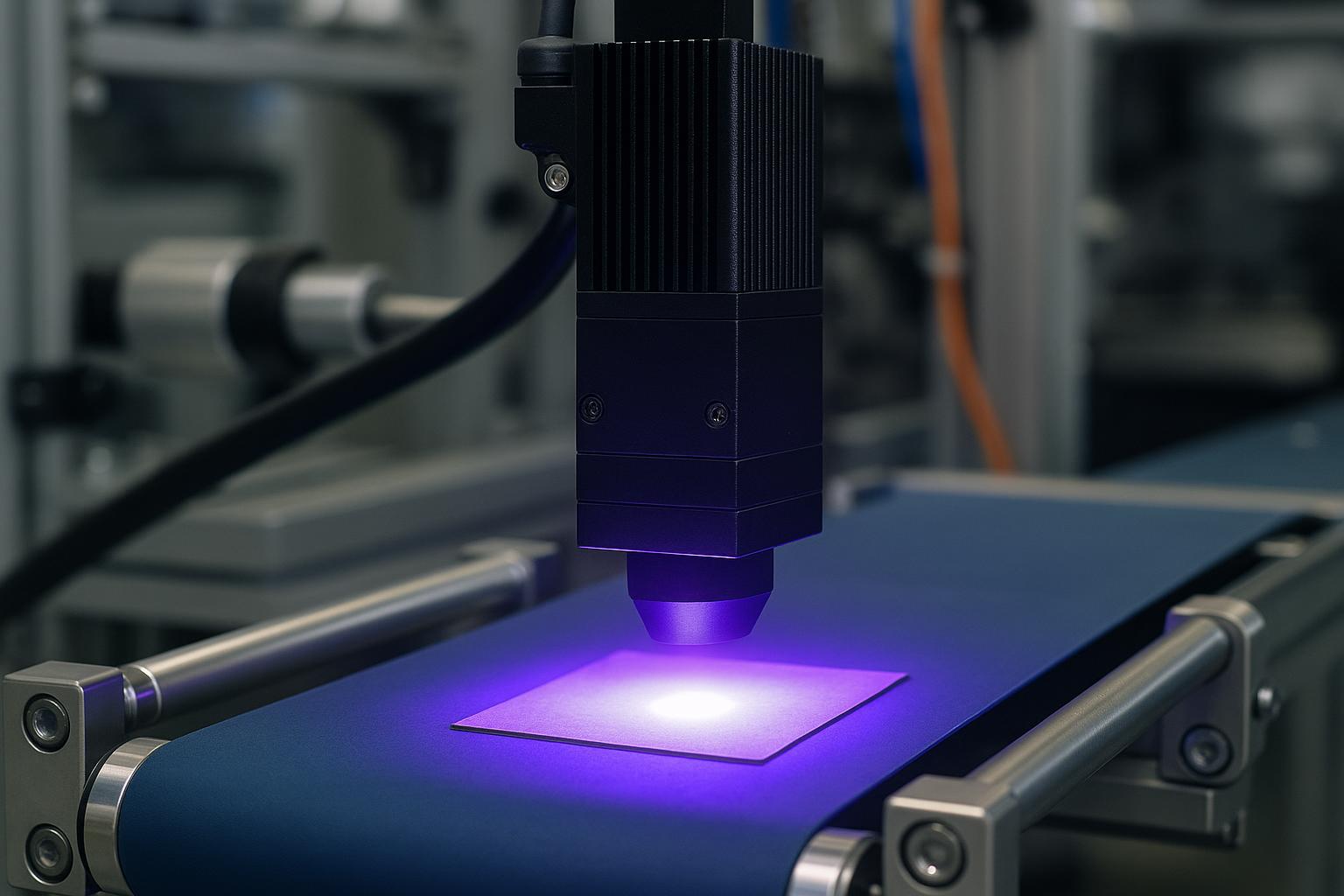
In manufacturing, precision holds immense importance. Enter UV spot curing systems, an innovative solution for achieving quality outcomes while saving precious time. Utilizing ultraviolet light, this technology efficiently cures adhesives and coatings. Picture a process that not only boosts productivity but also enhances product quality across countless sectors, from medical devices to electronics. This represents a significant evolution.
How UV Spot Curing Enhances Precision in Medical Device Assembly
The demands of medical device assembly require unparalleled precision. With patient safety on the line, manufacturers simply cannot compromise on quality. This makes UV spot curing essential. By deploying UV-curable adhesives, operators achieve remarkably precise bonding. Instant curing times enable quick component assembly, an absolute necessity in fast-paced settings.
Breaking it down further:
- Immediate Strength: UV-curable adhesives reach full strength in a flash, which helps minimize downtime.
- Controlled Cure Depth: Adjusting cure depth offers better protection for delicate components.
- Versatile Applications: Whether bonding metals, plastics, or biocompatible materials, UV technology shines across various substrates.
The impact of these systems on medical manufacturing is significant. Instead of relying on conventional, often slow methods, manufacturers can streamline operations. Enhanced precision correlates directly with reductions in errors and scrap rates, driving overall efficiency. Clients frequently find that the advantages realized extend beyond operational gains, boosting reputation and reliability as well.
Applications in Electronics: Boosting Efficiency and Quality
In electronics, efficiency is everything. Devices are shrinking, but functionalities are expanding. UV spot curing systems cater to these needs by offering rapid curing solutions that fit the manufacturing pace of modern electronics. Consider the evolution of smartphones: they require components that are both sturdy and lightweight. Achieving this balance is feasible with advanced curing technologies.
Here are some noteworthy advantages:
- Reduced Cycle Times: Manufacturing processes can be dramatically sped up—essential in today’s cutthroat market.
- Improved Adhesion: UV-curable materials bond exceptionally well with diverse substrates.
- Lower Temperature Curing: This approach alleviates thermal stress on sensitive electronic components, safeguarding their integrity.
Manufacturers leveraging UV technology typically report cycle time reductions of up to 50%.
Incorporating these systems onto the production floor is more than a mere investment in equipment. It’s a shift in how products come to market, resulting in improved consistency and quality. By integrating UV spot curing systems, businesses foster an environment of meticulous production, ultimately leading to heightened customer satisfaction.
Transforming Production Lines: Benefits of UV LED Technology
Embracing UV LED technology goes beyond following trends; it brings essential operational advantages. These systems are redefining production lines worldwide. Today’s manufacturers emphasize energy-efficient practices, prioritizing sustainability without compromising productivity.
Low Energy Consumption: A Sustainable Choice for Manufacturers
One fundamental benefit of UV LED systems lies in their low energy consumption. As energy costs continue to rise, selecting solutions that trim overhead makes economic sense. Traditional curing methods often waste energy through heat outputs and prolonged curing times. UV LED technology, on the other hand, excels in performance without these inefficiencies.
Key advantages include:
- Energy Efficiency: UV LEDs require significantly less power than older UV lamps.
- Long Lifespan: LEDs last longer, leading to reduced replacement costs and waste.
- Less Heat Emission: This results in lower cooling expenditures for manufacturing facilities.
Adopting UV LED technology not only boosts the bottom line but also showcases a commitment to sustainability. As consumers become increasingly eco-conscious, it’s crucial for manufacturers to pursue greener practices.
Speed and Versatility: Meeting the Needs of Diverse Industries
Speed drives production. Markets shift quickly, demanding that companies adapt on a dime. UV spot curing systems excel in applications requiring rapid turnarounds. From automotive to cosmetics, these systems are versatile enough to accommodate various materials and adhesive types.
Consider these capabilities:
- Multi-Substrate Capabilities: They easily work on glass, metal, plastics, and composites.
- Adjustable Cure Rates: Users can customize curing times to suit specific production needs.
- High Throughput Levels: These systems empower manufacturers to meet increased demand without sacrificing quality.
The flexibility to switch between projects provides manufacturers with a significant competitive edge. As industries evolve, businesses must pivot quickly. Fortunately, UV spot curing technology enables this agility, all while maintaining operational effectiveness.
Cost-Effectiveness of Implementing UV Spot Curing Systems
The financial implications of adopting new technology in manufacturing warrant careful consideration. While the initial investment in UV spot curing systems may seem high, it delivers substantial returns that extend beyond short-term gains. Professionals and businesses often notice significant ROI when evaluating long-term savings against upfront costs.
Reducing Waste: Optimizing Material Usage
Minimizing waste is crucial in any manufacturing process. UV spot curing systems facilitate precise adhesive application, cutting down on wastage. Traditional methods often generate excess material usage, inflating costs and undermining environmental sustainability.
Consider these elements:
- Precise Application: Exact curing minimizes material waste, optimizing resource utilization.
- Less Scrap: A reduction in assembly defects means lower scrap rates.
- Better Resource Management: This boosts overall efficiency by decreasing costs per unit.
Long-Term Savings: The Financial Implications of UV Technology
Long-term savings remain a key consideration when investing in new technology. Although the initial costs of UV systems may appear steep, the operational efficiencies achieved lead to considerable financial benefits. Take energy costs as a starting point: transitioning to UV spot curing can markedly diminish energy consumption and, therefore, lower production expenses.
Key savings worth noting:
- Maintenance Costs: UV LED systems typically have lower maintenance demands compared to traditional options.
- Enhanced Quality: A decrease in rework leads directly to lower costs, benefiting profit margins.
- Scalability: These systems can adapt easily to rising demand, distributing costs more effectively across larger volumes.
The benefits only compound over time. By considering reduced defect rates, energy efficiencies, and improved throughput, manufacturers often find the case for UV technology adoption exceptionally persuasive.
What to Expect When Integrating UV Spot Curing Systems
Integrating any new system may seem daunting at first. However, with careful planning and appropriate guidance, businesses can navigate the transition to UV spot curing systems smoothly. Professionals frequently stress the importance of taking a proactive approach during the transition, addressing potential obstacles in advance.
Smooth Integration: Streamlining Your Current Setup
Incorporating UV spot curing systems into existing production lines requires thoughtful planning. Every system presents unique specifications and setup needs. Manufacturers usually need to rethink their current workflows to incorporate this new technology. This goes beyond merely installing equipment; process optimization is essential too.
Key strategies include:
- Pre-Installation Analysis: Understanding existing processes facilitates tailored integration strategies.
- System Compatibility: Ensuring effective pairing of new technology with existing equipment is crucial.
- Phased Implementation: Gradually introducing the technology helps minimize disruptions.
Many manufacturers discover that meticulous planning paves the way for seamless transitions that enhance productivity. Ultimately, the goal remains the same: to maintain or even elevate current productivity levels.
Training and Support: Ensuring Smooth Operational Transition
After installing the systems, adequate training becomes essential. It’s important that employees grasp both the operational aspects of the UV systems and their integration into daily workflows. Proper support during and after installation ensures any issues can be swiftly addressed.
Focus on these training components:
- Hands-On Training: Practical experience with equipment fosters confidence and solidifies concepts.
- Ongoing Support: Access to technical assistance and resources is vital for quick issue resolution.
- Regular Refresher Courses: Keeping the team updated on best practices is crucial for maintaining operational efficiency.
Training and integration are crucial; they transform the system into a competitive advantage.
Manufacturers who emphasize training cultivate self-assured teams adept at addressing challenges as they arise. The transition to UV spot curing systems ultimately leads to smoother processes and improved outcomes.
FAQ
What types of industries can benefit from UV spot curing systems?
Practically any industry that utilizes adhesives and coatings can benefit from UV spot curing technology. This encompasses medical devices, electronics, automotive, cosmetics, and even packaging. Each sector enjoys distinct advantages, from enhanced product quality to quicker production speeds.
How do UV spot curing systems affect labor costs?
With improved efficiency and reduced cycle times, UV spot curing systems can lower labor costs. Faster curing times generally mean manufacturers need fewer man-hours to achieve the same level of output. This translates to more streamlined operations and potential relief for workforce pressures.
Are there any specific maintenance requirements for UV LED systems?
While maintenance for UV LED systems is usually less intensive than for traditional options, regular checks are still necessary. Routine cleaning of the lenses and ensuring the curing mechanisms function properly can help preempt future issues. Taking these proactive steps contributes to long-lasting and reliable performance.
What are the energy savings associated with UV spot curing?
Energy savings can be impressive. UV LEDs consume less power compared to traditional curing lamps while boasting extended lifespans. Clients frequently notice energy cost reductions of up to 70%, which can result in substantial long-term savings in overall production expenses.
How does UV curing affect the safety of manufactured products?
Products subjected to UV curing often exhibit enhanced safety features, especially in fields like medical devices. Due to the rapid strength achieved with UV-curable adhesives, there’s a diminished risk of failure during usage. Consequently, measures supporting patient safety become more effective, aiding compliance and reliability goals.
Can UV curing systems adapt to future manufacturing trends?
Certainly, UV curing systems offer remarkable adaptability, making them well-equipped to respond to changing manufacturing trends. Their ability to handle diverse substrates and adjust curing times allows these systems to keep up with rapid evolution in production methods and consumer expectations.
What training is needed for staff to operate UV spot curing systems?
A comprehensive training program is essential. Employees should participate in hands-on training to become familiar with both the equipment and its operational details. Continuous education on best practices assures that everyone remains competent and confident in utilizing the technology effectively.
Are there any environmental benefits to using UV curing systems?
Without a doubt. UV curing systems contribute to reduced material waste and energy usage, aligning with broader sustainability objectives. Clients typically observe that their processes produce fewer volatile organic compounds (VOCs), making UV systems an environmentally friendly choice in manufacturing.