Dr. Melvin Rabin is a retired clinical psychologist who spent nearly five decades treating patients at his private practice in Needham, Massachusetts, where he applied Gestalt therapy, EMDR, hypnotherapy, and family and couples counseling to help individuals and families navigate psychosocial challenges. Beyond his clinical work, Dr. Melvin Rabin lectured at institutions including Harvard University, Boston College, and Suffolk University, and provided coaching to senior executives and fellow psychologists. His extensive credentials include EMDR certification, a doctorate in psychology from Boston University, and recognition as an expert witness in PTSD. Drawing on decades spent studying how people develop and adapt, Dr. Rabin’s background offers a useful lens for examining creativity in children, a skill increasingly emphasized by parents, teachers, and caregivers seeking to help kids become confident problem-solvers and independent thinkers through everyday play and exploration.
Creativity is an important skill that can help children become confident problem-solvers, independent thinkers, and effective communicators. Learning how to develop creativity in children does not require expensive toys or specialized programs. Parents, teachers, and caregivers can encourage creativity through everyday activities that give children opportunities to explore, experiment, and express themselves.
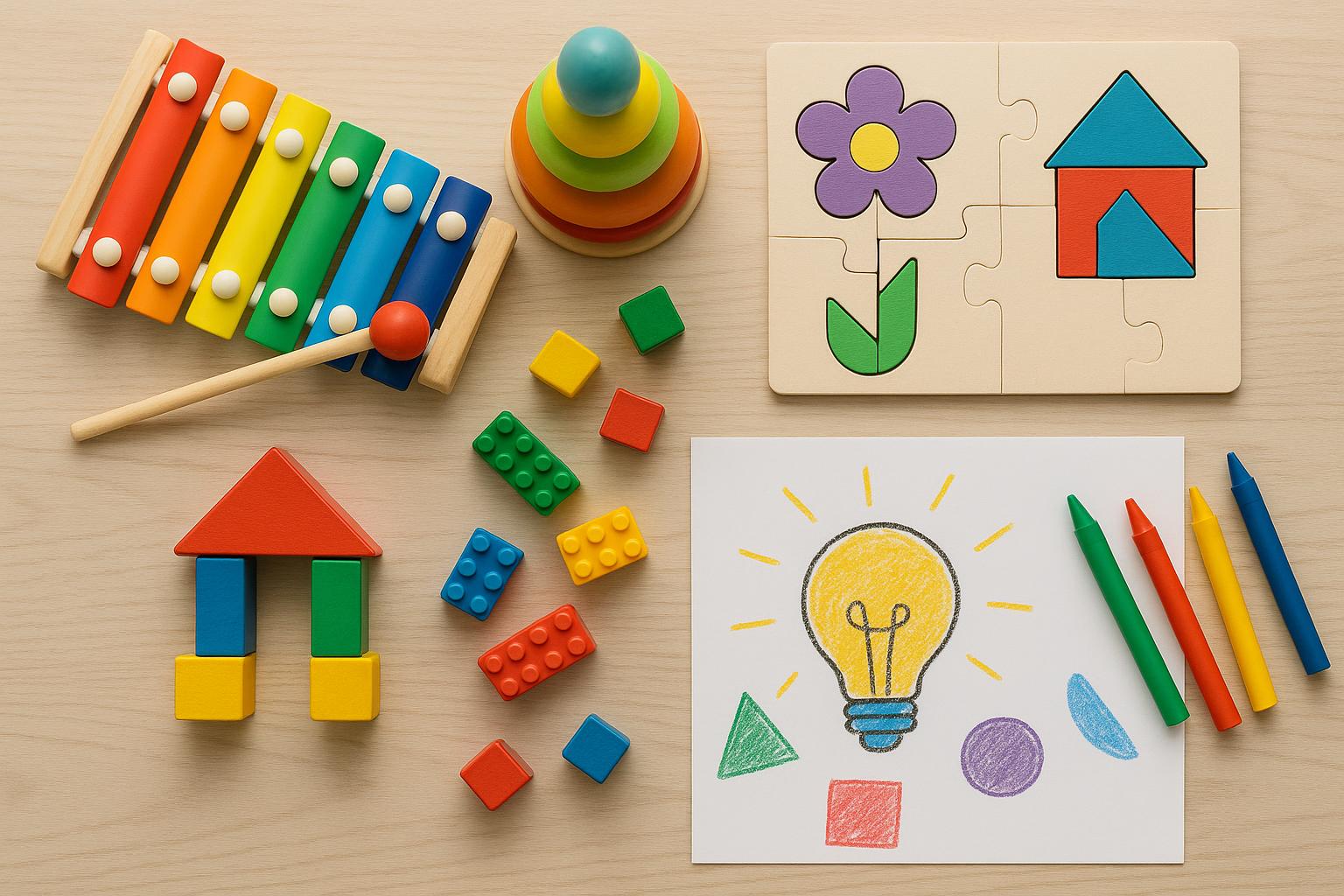
One of the most effective ways to encourage creativity in children is through open-ended play. Instead of toys that have only one specific purpose, materials can be provided that can be used in different ways. Building blocks, modeling clay, crayons, cardboard boxes, and craft supplies can inspire children to create their own games, structures, and stories.
A cardboard box, for example, could become a spaceship, castle, store, or race car. This type of play allows children to use their imagination and discover that there can be many solutions to a single problem.
Giving children plenty of unstructured time is another important part of developing creativity. When every hour is filled with schoolwork, organized activities, and entertainment, children may have fewer opportunities to think independently.
Allowing time for drawing, reading, playing outdoors, building, or simply exploring their surroundings gives children the freedom to follow their interests. Even occasional boredom can be beneficial because it encourages kids to come up with their own activities and ideas.
Parents can also support children’s creativity by creating an environment where mistakes are accepted. Children may avoid trying new things if they believe there is always a correct answer or that mistakes will be criticized.
Instead, it’s better to encourage experimentation by asking questions such as, “What else could you try?” or “What do you think would happen if you changed it?” Treating mistakes as opportunities to learn can make children more comfortable taking creative risks.
Asking open-ended questions is another simple way to stimulate children’s imagination. Instead of questions that have only a yes-or-no answer, children can be encouraged to explain their ideas and consider different possibilities. Asking, “What would happen if animals could talk?” or “How could we build a bridge with these materials?” spurs creative thinking while making learning more engaging.
Parents can also introduce children to new experiences to expand their sources of inspiration. Visiting museums, libraries, parks, science centers, and cultural events can expose children to unfamiliar ideas. Reading books from various genres, listening to different types of music, exploring nature, and learning about other cultures can also encourage children to look at the world from different perspectives. These experiences can provide ideas that children later incorporate into their own creative activities.
Creative activities for kids can also become opportunities for children to make their own decisions. Rather than telling a child exactly what to draw or build, letting them choose their materials, colors, subjects, and methods builds independent thinking. For example, during an art project, parents can provide supplies and a general theme while allowing the child to decide what to create. Giving children age-appropriate choices helps them develop creativity while reinforcing confidence in their own ideas.
Finally, adults should focus on the creative process instead of judging the finished product. Rather than simply saying that a child’s drawing is beautiful, they can ask how they came up with the idea, what they enjoyed about the activity, or what they would like to try next. This teaches children that creativity is about exploration, learning, and self-expression rather than perfection.
About Dr. Melvin Rabin
Dr. Melvin Rabin is a retired clinical psychologist who practiced in Needham, Massachusetts, for nearly five decades, specializing in Gestalt therapy, EMDR, hypnotherapy, and family and couples counseling. He lectured and taught at institutions including Harvard University, Boston College, and Suffolk University, and provided executive coaching alongside his clinical work. Dr. Rabin holds a doctorate in psychology from Boston University, is EMDR-certified, and has been recognized as an expert witness in PTSD. In retirement, he enjoys reading, swimming, and golf.